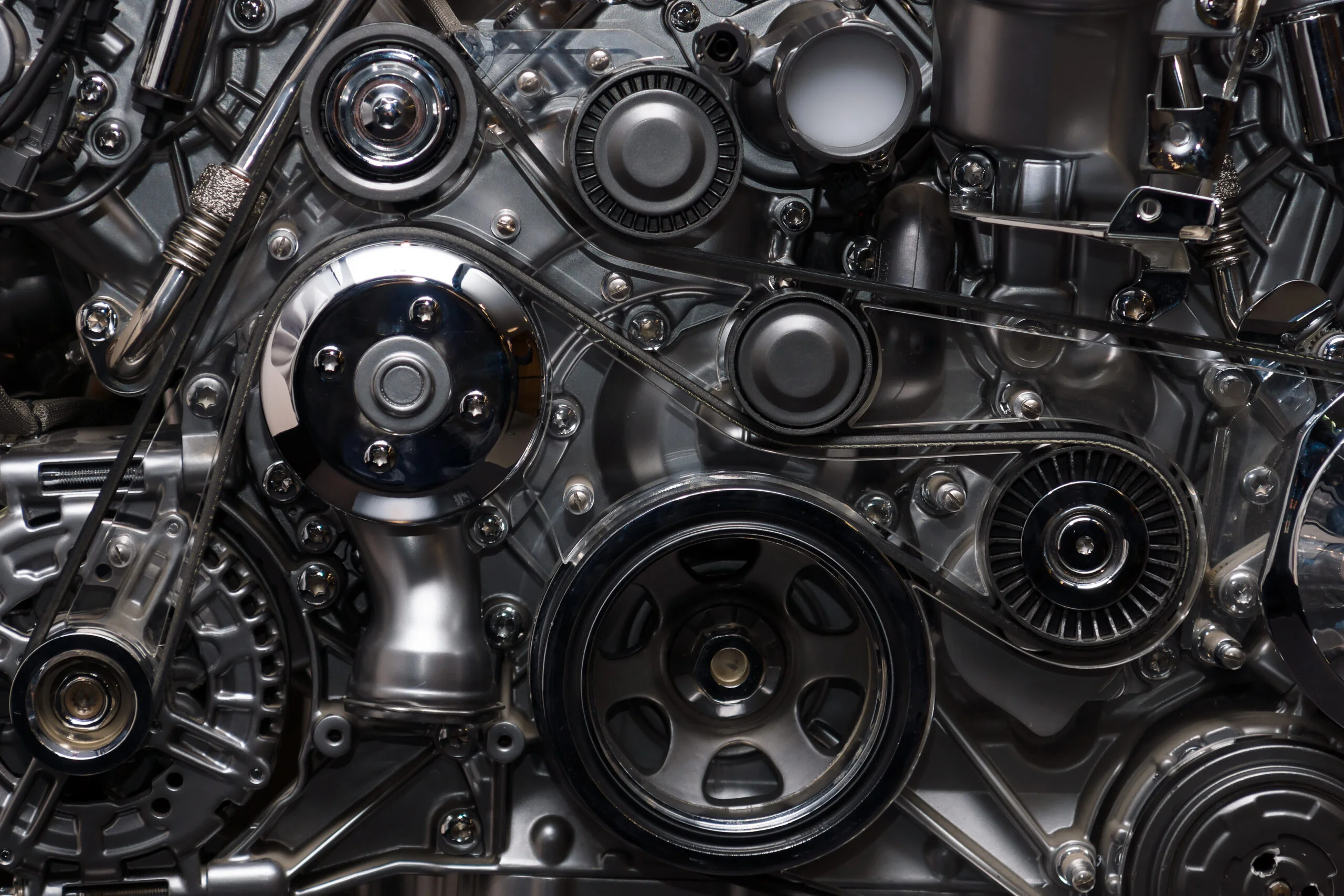
Every Sterling engine is broken in, run and certified in our own dyno cell before it ever leaves Milford. The number on the sheet is the number you take to the track or the water.
Not a sample. Not the ones headed for a race program. Every engine we build or rebuild is run on the dyno and its power verified by hand before it ships. Naturally aspirated, supercharged or turbocharged, marine or automotive.
Rings seat, bearings load and clearances settle under controlled conditions in our cell, not on your first run offshore with a season on the line.
We dial the calibration in our own cell across the rev range, so the map matches your induction, your fuel and the load you'll actually see.
Power verified by hand and documented. No estimates, no catalogue figures, no "should make about." The sheet travels with the engine.
Running an engine on the dyno is fundamentally different from running it on the water. Load is controlled and repeatable. RPM is held at specific points for specific durations. Temperature, oil pressure, fuel pressure and air/fuel ratio are all monitored at once.
On the water those same variables are present but largely invisible. You can read a temperature gauge and feel the power, but you cannot see oil pressure at a specific RPM, fuel pressure at peak demand, or air/fuel ratio across the rev range. Problems develop for hours without ever tripping a gauge.
Most in-season failures are not sudden. They are conditions that were already present and only showed themselves under sustained load.
A weakening pump or partially blocked filter can deliver fine at moderate load and fall short at peak. Held at full load, we watch fuel pressure. If it drops below spec under sustained demand we catch it, instead of you finding a lean condition at wide open throttle offshore.
A sticking thermostat, a partially blocked heat exchanger or a worn impeller will run the engine hotter than spec under sustained load without ever causing an obvious overheat in short bursts. Sustained testing exposes it.
Plug wires, coils and caps break down under the electrical demand of sustained high-RPM running. On the dyno the engine is held there long enough for a weak component to declare itself.
Oil pressure held and watched at specific RPM points tells you about clearances and bearing condition long before anything is audible from the helm.
Dyno time is not only for a fresh build. Pulling an engine mid-season and putting it back on the cell is one of the most effective ways to find a developing problem while it is still cheap to fix.
It is the difference between a scheduled afternoon in Milford and a DNF with a season on the line.
Read: how dyno testing prevents in-season failures
Rebuild, refresh, repair, or upgrade over the winter. Sterling pays up to $500 toward shipping your engine to the shop.
Yes, every single one. Before a Sterling engine leaves Milford it is broken in and run on the dyno, and its power is verified by hand. The number on the dyno sheet is the number you take to the track or the water. Verified numbers, not promises.
Yes. Dyno testing and calibration is a service in its own right, not only a final step on a Sterling build. Bring us an engine for break-in, a calibration session, a mid-season health check or a verified power figure, and we will schedule cell time around it.
Engine dynos and calibration for naturally aspirated, supercharged or turbocharged setups, marine and automotive alike. On the water that means inboard power built on Mercury, Volvo and Crusader. On the auto side, Big- and Small-Block Chevy, LS, Ford including the 460, Mopar big-blocks and Hemis, plus vintage cast-iron and Ferrari.
Because you cannot see what matters. On the dyno, load is controlled and repeatable and we monitor oil pressure, fuel pressure, air/fuel ratio and temperature at once. On the water those variables are all present but largely invisible, and a developing problem can run for hours without tripping a gauge.
It is one of the most underused checks in performance boating. A mid-season session catches fuel delivery, cooling, ignition and bearing issues while they are still cheap to fix, rather than at wide open throttle with a season on the line. We wrote about it in detail here.
Our cell is at 54420 Pontiac Trail in Milford, Michigan. Cell time is scheduled individually around build work, so the sooner you call the better. Reach us at (248) 684-5040 or info@sterlingengines.com.
Call (248) 684-5040 or send us your setup. We will tell you what the session should cover.